About this episode
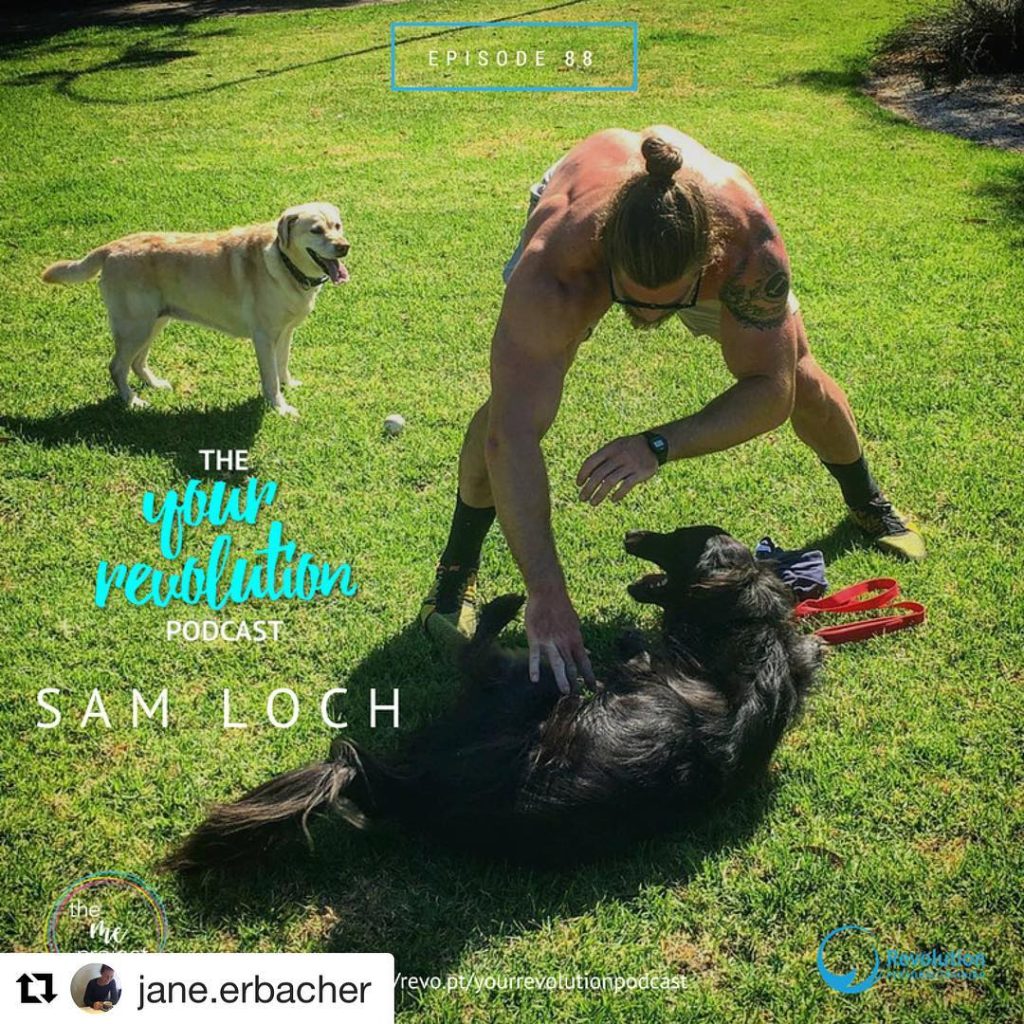
Sam Loch is a two-time Olympic Rower, having represented Australia at the Beijing and London Olympics. Since his Olympic days he’s focused on something you all know I’m familiar with: the Concept2 indoor rower. Sam has the 24 hour tandem record, the 1000m record, the max-metres-in-a-minute record and held the 1000m record on the skierg, just for fun. Often we think that people as successful as Sam are just born that way, that there’s something preordained in their genes. But the reality is that Sam is not necessarily suited for rowing, and was told his whole career that he would need to work very hard to make the Olympics. Through nothing more complicated than dedication and effort, Sam showed that his hard work would pay off and made the Olympics not just once but twice. “If you say something’s important to you, it can’t just be important to you when you feel good about it”. People say they want to achieve something, like losing weight, moving better or feeling better. Yet day in, day out, their actions demonstrate that they really want the opposite. “You’re not getting up early because you like it, it’s because of your goal. You can take that and apply it to why you’re eating what you’re eating, to why you’re doing the stretching and the yoga, to why you’re saying ‘no’ to something … it’s the bit of you that decides something is important.” Tune in to today’s Your Revolution podcast to hear Sam’s incredible story: what he really thinks about elite sport, his thesis on body image (did I mention he went to Princeton?), and the simple attitude it takes to succeed. revo.pt/yourrevolutionpodcast
About the guest: Sam Loch
Australian Olympic rower (London 2012, Rio 2016).
Episode transcript
Listen & subscribe
Browse all Your Revolution Podcast episodes, or listen on .
Train with RevoPT
Inspired by this episode? Explore performance training at our South Melbourne studio.
Episode transcript
Hey everybody! Before we dive into today’s awesome episode with Sam Wock, which I am so excited about, obviously, I’m so excited about it, but I wanted to talk about something that is running at Revo this Saturday and it’s gonna be really really great and we only have a couple of tickets left. So a lot of you have probably been listening to the podcast over the last couple of months, but I featured Kevin Toonen on the podcast earlier this year, and I actually did a repeat post of it because it was such a successful episode, but I went up to Sydney and met him a few months ago, and I was absolutely and completely blown away by his approach to training and movement.
But more than just the training side of things, I was absolutely so impressed by his attitude and his message. In just the couple of hours that I actually spent training with him and talking with him and spending time with him, I learned so much about both my movement capabilities, my imbalances and also a lot about the attitude I have when I approach both training and life.
He’s absolutely on the same page as me and he’s understanding and his real passion for the transferability of training to the rest of your life and he talks a lot about how training and the approach that you have to your training is what makes you a better human, a better dad, a better wife, a better husband, a better workmate, a better everything comes from the approach that you have to your training and also the outcomes that come from your training.
So I’m super excited at Revo to be hosting him this Saturday in his only workshop in Melbourne, which is going to awesome and it’s called Be Hard to Kill which I think is a really awesome little line there but it’s this Saturday at Revo. So you can sign up by jumping across to Revo. pt/b-hard-2-kill or you can jump on our Instagram and follow the link there and then you don’t need to be able to spell anything.
So it’s this Saturday Revo PT in South Melbourne, 12pm till 4pm. and the MePeraiject. The purpose of the Your Revolution Podcast is to inspire you on your mission of betterment. Each week on the podcast you’ll make game changes who have created extraordinary lives and you’ll listen to stories and lessons to empower you to make the changes necessary to your life.
The Your Revolution Podcast is committed to fitness, health, nutrition, and your Now first a word from the Eurovolution podcast sponsor, lalotactical. com athletics feel when I’m deadlifting, squatting and jumping. Yet still light and responsive enough that I can feel everything through my toes. I feel so much more confident, so, so beyond excited because I’m sitting here next to somebody who’s recently become my friend but has been someone who I’ve really really really looked up to for a few years now I would probably say I have no idea what the start date of my fan girl of you has been but was but here is Sam Lock Hi Sam Hi In his house in his gym house.
Which is the coolest. I know. And what did I just do? Like a minute ago. You sawing my leg. I stepped on his…… rower. Right here. Which is between the camera and us. And I feel so bad. I’m so sorry. It’s okay. I was monitoring fraction. I know. I will never. I will never. I am like successfully walking around everything now. Just don’t touch anything at all.
So this is Sam Lock. He is incredible. Anybody who has not heard of him jump on line, jump on Instagram, jump on something and Google him because he is an absolute game changer and not just in the world of rowing but in the world of being just great at anything. I call you the roking. You’re the roking in my head. And I think that our friend Hamish also refers to you as the roking.
So… – Could be worse. – Yeah, totally. But he’s an absolute game changer and I wanted you on the podcast for quite a while now and I only met you for the very first time last week. But the reason I really want you, wanted you on the podcast is I talk to people all the time who listen to the podcast about how everybody I have on the podcast is amazing and they’ve done great things with their life and they’ve got such purpose with their life and I want you on here because everything that you have created in your life, every success you’ve ever had has come from your hard work and you weren’t born with any superpower or special power and what you do every single day of your life which is so aligned with a purpose that you have is something that I admire so much and I want people who listen to understand that they can do something great with their life as well and it just takes commitment and hard work and some passion And so that’s why I wanted you on here sounds good sounds good, and I did tell you I’d talk too much So I’m sorry everybody who’s listening I am very nervous because Sam is He’s like he’s like a huge mentor of mine.
I’m a mentor hero. I’m not sure He’s not gonna seek now. He’s really I just I was just annoying you saying and I I was thinking like what what I’m doing. It’s not curing cancer. Yeah, I don’t think of it as great. It’s really not it’s a niche activity and I’m steering towards something that like I’m good at now but most of the attributes that I’ve developed in order to be able to achieve the goals that I have, that they’re not God given.
I’ve got above average talent, but what I’ve tried to be able to do is exploit my potential as much as possible. And I’m doing it in a certain realm that I’d like to encourage people to, if that’s something they’re interested in and they don’t necessarily have to aim to be the best in the world but we have a lot of undiscovered potential and you don’t really know what you’re capable of until you do your absolute best for a period of time and trying to figure out what your best actually is takes a period of time.
Most people feel like they’re 40% is there 100% and they just and they compress a little bit more. But within the context of a training session itself be that on the role or otherwise or just in their day to day life. I think it’s really interesting because I agree with you. You’re not curing cancer. You’re not doing things like that, but I think it’s important not to underestimate the influence and impact you have on ordinary people’s lives just by requiring more of yourself than what’s normal.
And we had a really great conversation last week about how we’re both really interested in making other people’s lives better and how you do a lot of coaching. it’s not just with people who, you know, want performance goals, who want to be, you know, get world records or be the actual best. It’s with normal people who want to be better. And I think that it’s really important that in this sphere, we recognize that any impact on somebody’s life that makes it better is something to be proud of.
And you do that in by a lot of the time, by just requiring a lot of yourself. And so I agree with you, there’s some people out there that are absolutely making the world an incredible place on a macro scale. But I think you are as well. – Yeah, there was never, in my intention, was selfish basically. And that’s the thing I wanna do, and I try to figure out a way to do it and then attempt to do it and whatever that goal, that’s changed over time and probably just the proliferation of social media that has that access to people and you can broadcast what you’re doing a little bit more and it seems as though what I’m doing has some traction with some people.
A bunch of weirdos. (laughing) – A lot of them. – And then my sort of weirdos. – Totally. – I had to follow other people with the, you know, hoping, you know, maybe to learn a thing or two to gain some, I don’t really get my motivation from that, but I do like seeing people kick ass because they’re pursuing their own goal with their own resources. Totally.
So let’s talk about exactly what you do and where you’ve come from. So we met last week and I heard a lot about your life up until this point. I’d love people to know kind of your past, you’ve been to the Olympics, you’ve got a pretty interesting past. I’d love to let you let people know what fled you to now. Sure, there’s a long version and a short version, many in between.
I guess my relative history is that I went to high school in Sydney, the King School, which is where I started growing on the water. We hadn’t had a lot of recent success, but the sport at King’s is pretty important. There was this sort of environment that it was encouraged for you to, like, it seems this would be in the school’s first team and as a young kid trying to find his way.
That’s what I aspire to do and it’s originally interesting rugby but Roaring became the sport to practice in the summer because it was the best for fitness and for toughness and these attributes that you’re looking for. As a 14 year old and it was easy because although I was obsessed with basketball we were terrible at that so didn’t win a single-scale basketball for two years started rowing as soon as I could because the only thing you start at the start of high school because they worried about you back so that’s the case you need to rowing in school sports.
So waited a couple of years, terrible summer sport experiences in a winning front. And then when we started rowing, like my very first race, I remember the start of the set, attention, go to a couple of strokes. And then all I could see was just puddles either side because all the crews had just rode off from us. And I was like, how are they so far ahead so quickly?
And we had decent resources but we just didn’t have a culture of winning at that stage and followed a few more seasons of not winning a single race. And I was gonna throw it in the towel in my last year because I was like, inIt really would rugby school, I can just go throw the shot, put it in lift weights and try to provide me a life. ” This would be way easier and more fun and my mum said, “Oh, maybe she’ll keep rowing.
” And so I did and with the same guys, same coach, same resources, we trained our arses off and we won maybe 28 races in a row and that sort of made the idea of rowing in the future, seeing a little bit more enticing because I’m like, oh, winning’s fun, winning races is fun. And I was fortunate enough to be able to extend my rowing and academia by going to Princeton University in the US and I was there for four years and we won way more races than we lost and I rode with some awesome guys.
Both people and athletes, really high standard, the academic environment is incomparable to anything I was going to otherwise have access to and it did help develop me from a wrong perspective to be able to pursue some future goals. I came back in 2006 and that’s when I graduated and I wanted to in 2004 watching the Athens Olympics online and I saw the US men’s aid when they got metal and I knew a lot of those guys and they were just regular people.
You know, big guys, guys around my size and it was just very tangible and I thought I could do that and then at that stage, like, I remember 2004, 2004 that stage it was just from the henceforth it was making that happen. Like there’s an expectation you graduate college like again I go do something in your life and I was like this is what I’m doing whatever it takes.
Any other goal is only to amplify that goal. So I was able to get down to the RAS in Canberra at the end of 2006 and then was selected in the men’s eight for the Beijing Olympics in 2008. And I kept growing for the next four years to London, also in the mensate and also the same result which is six places both times which is like a piece with it, but it’s given the performance side of the Olympic experience is so important to me.
The people, if they hear you’re an Olympian, they’re like, “Oh, that’s amazing, it is. ” And I’m so thankful for it, but for me, it’s kind of tainted because everything we perform to our capabilities and I’m all about performing to our capabilities. And I accept my responsibility and whatever it was. And it’s not as though we didn’t have potential.
We had some good years in the meantime. So one bronze medal in 2010 and 2011. We had a lot of good guys, but I don’t think we were. Anyway, everyone has an entirely positive experience at the Olympic Games because in any event there’s only one gold medal and then everyone after that’s going to be some version of disappointed. So it was on balance terrific and just to be given the chance to do that is I think the longer I get away from it the more I hope to steer towards that as opposed to being angry about how performing and then since then I’ve basically just been bashing up and down on the earth and lifting some heavy weights you know being in a team for a few years and especially in an A and feeling just a little bit like you didn’t have any control in any any part of the training or preparation or calendar or what by you’re gonna be in or necessarily who you’re gonna be rowing with and so most of my goals have been selfish but also within my control so I can if I don’t achieve my targets, well then I’m entirely responsible and I’m happy to accept when I don’t hit the mark and I’m happy to feel good about myself if I do.
– So what are you working towards right now? – Well I’m still, the short version is under developing some attributes that will help me allow the future goals. So I think no matter what your goals are, it’s probably a good idea to be stronger and healthier. And whether the goal is for a distance that’s longer or shorter, it might be worth developing more aerobic components and more exclusive qualities.
So I’m focusing on attributes that don’t come to me, basically my weaknesses. I focus on the weaknesses and the performance is gone. I think what’s really interesting about what you do as well is it’s absolute, you just said it before you take your entire responsibility and you from every aspect of your training to the plan that you follow your recovery methods, your nutrition, your rest, everything you completely program yourself.
What do you find is challenging about that? Like do you find you know, some days you don’t want to do it or? No, if this I mean the thing I find difficult is the most recent goal was for the 500m warm record and it’s a really tough standard. It’s like 20 years old as well. That’s 26. Yeah. Oh, thereabouts. But that’s good. Like it means it’s gonna be a real test of what I can bring to the table, whoever else attempts it.
And I fell short, second fastest time ever, 0. 9 away from the current order, 0. 9 to second, which is short, but it’s kind of long given the shortness of the duration. So it was just what most measures an out and out failure. And so people are kind of whited and not happy. And I don’t necessarily know, like there’s not a short answer. What it is is a combination of things that I think I could do better.
And then that’s what I try and do. I’m like, okay, here’s where I learned from that preparation. Here’s where I think I could have done things differently. Here’s where I made some mistakes. Here’s where I emphasized something too much or something else too little. And then I try again, or I use that information and apply it to some other goal. So I don’t like the uncertainty of, you know, not being able to, the pattern being accountable is that it all resides with you if you perform and if you underperform.
And so accepting responsibility is like, yeah, if I didn’t, then there’s no one to blame here. It’s so objective and that’s fine but there’s no there’s no necessarily definitive answers and so just have to live in that space where it’s problem solving basically. And what did you think? So what exactly is the record and what did you get? Like what’s your fastest time?
Yeah, so the record is 110. 5 and I went 1114. So for everybody listening, so I talk about your normal project workshops based from Australia. I described you as… Pretty much. And I talk about you and I knew it was around the 111 mark. I’m sorry. We, Sam and I have laughed ever since meeting about how opposite we are in so many ways. I don’t have great memory of numbers.
I think you’re quite good with that. You remember some of mine that I posted at an end. I read one time. I know it, but there’s so many things I can’t. Yeah, I think it’s a matter of wiring and attentiveness. I mean that’s that is a an eighth strength. I don’t try to do that. Totally. And I can’t. And my memory on average is not good. So I can’t find it.
Just earn numbers. But it’s interesting because I talk about you a lot and I explain to people because what they say on the screen is they’re paced per 500 meters and it’s something that I’m explaining a lot is what the screen is actually telling you. So for Sam to do an 111. 4 which means he has to hold a pace that’s about 111 for a minute and 11 seconds or what he’s got aim is which is a minute and 10 seconds which is incredible.
So what did you find in your problem solving of not attaining that goal in that time? Like what in I sort of backed off in a way that wasn’t helpful. So lifting heavy as possible is not necessarily ideal. And so it has to be somewhat maximal just because it’s going to create too much fatigue. But too little intensity is not going to be very stimulus.
So you’re going to have to walk that line. And I did did too little too soon because my tendency is to do too much for too long so I kind of that was just a zig when I should have zagged and I thought I lost a little bit of my capacity to row distance per stroke so I should have done some more lower stroke know, lower stroke rate, higher power, just to make sure from catch to finish that I was able to produce peak output.
What I, you know, the qualities that I, you know, did develop, like lactate tolerance and there’s a lot of stuff there that was working, but the margin for error is small and it’s just, you know, I can’t rely on these overwhelming qualities to make it happen. I have to push all the right buttons. The tiny little percentages. Yeah. What about like in terms of mental resilience?
Like what does it take, because you attempted it twice or three times within a week? Three times. What does it take to come back from like a disappointment mentally like you’re very good at problem solving like kind of the the physicality of it but like what happens to you in your mind during the training or during the execution. How do they stay hang tough?
Yeah, and When you in the experience, it’s you know, you’re just dealing with it’s like what is okay? What’s the next step? And so I imagine That’s all anyone’s ever tried to do is like okay, let’s let’s get on with it Let’s reflect on what what didn’t work what did work but stay pretty pragmatic I remember like having a sense of I Yeah, I would have preferred if I’d done this already, I’d have gotten a chance on this side, and you could move on with my life.
But I was, I’d obligated myself to that goal. And I had a, there was a fine art time frame, because I was flying over the flying overseas my last attempt was the day before flying to the US and so it was just you know make the best of it with the time that I have which I think is all that anyone’s ever trying to do it was just a little bit more acute at that point in time.
Totally and how do you think you stay accountable to you? Because a conversation I have with people so often is they need somebody to stay accountable to, but you’re entirely accountable to yourself. How do you sustain that? – Yeah, I’ve got this. It’s not unique to my friends like this as well. You have a certain, like I’m vigilant against beats like soft, like my own softness because I think of myself as when I was young, just I could have been a total pussy and I had to learn how to be tough and I think it’s a learnable quality.
And I remain wary of not cowering to like the inner coward that might be just try to get you to not do the thing that you’re supposed to do on a given day because the feeling of have cowards of that is worse than I mean that’s me that’s amongst the worst things imaginable. And so if I didn’t do a training session because I didn’t want to, I would take me a long time to get over that, because my whole value system is based around, well, this is not mandatory.
You’re into this or not, and if you say that something’s important to you, then it can’t be important to you when you feel good about it. It has to be important to all day, and every day. And that doesn’t mean that every day has to be smashing your head against a wall but when it’s time to show up you have to because it’s for your goal. In your coaching of other people you do online coaching and what kind of people do you work with and what kind of things do you address with them?
Well, I work with all sorts of people. So whoever gets in contact with me and we have a bit of back and forth and I try to be slightly about the people that I work with. But it’s not selective in terms of they need to be aiming to go sub six minutes for a 2K. It’s more like they need to be sufficiently motivated about whatever their goal is because with the online coaching I’m not there to I’m not that sort of coach anyway it’s pretty much hand-holding but if I’m not even in the same country and I’m setting you this prescribed workload and you don’t have enough energy to be able to do that, it’s not going to work.
So I can’t provide the motivation but I’m trying to provide the framework so that their effort can be expanded in the right direction. And it’s based entirely around what their goals are. That’s the starting point. Like what you want to do? And then I’m like, can I help this person do that? And is it an interesting goal? And then we’re working together to help achieve that goal.
– Totally, and they’re going to help themselves, exactly. It’s interesting that you said that. I just turned it right down. Sorry, I should have said it started, I take notes when interesting people talk, so I’m taking notes here. So I’m not just like writing or shopping this over here, but I think something you said just before which was when something’s that important to you, you show up, like you do it.
And I think that it’s interesting when you talk to a lot of people, I talk to people all the time that have this, you know, I want to do better in this area, this area, and then it’s like day in day out, their actions demonstrate, they want the opposite. It’s like, and you, you’ve said that it’s just an innate part of you. – It was not an A, I thought, well that’s what I’m wary of, is the, to, like, it just gives you leverage because, like, that’s what your goal is.
If you’re, you have to work out before you go to with getting up before the sun does. But I have plenty of times because my reasons to do so were good. If you don’t have good reasons, you’re not getting up early because you like, you do it because you have this goal. And then you can apply that template to the reason you’re eating the thing or doing the stretching or doing the session or saying no to whatever you need to.
It’s not because in that moment that’s’s what you want to do. It’s the bigger you that decided that something was important. And you’re allowed to, you know, your goals are up to you and they don’t have to stay fixed. Like if my passion for the 500 was gone, then I would have no qualms with just not pursuing it. That’s okay. Like you have to want to do it otherwise.
You’re not going to really be able to fight the energy. But I think if you say I’m going to do something and then you have to go ahead and do it. Totally. And give it your best and learn something from the experience that you can apply for future goals goals be they in the same realm like if it’s going fast, trying to write a machine or whatever else that people are interested in.
Totally and I think that I just wrote down process versus content and it’s like a lot of people get stuck in what the content of what you’re doing isn’t that it’s you’re pursuing this 500 meter right now but I think that what you’ve developed over the entire course of your life is the process of working towards a goal, the process of success. And I was really interested last week when we talked about the people that you coach and it’s less about them all being sub six minute 2K people to more about people who want more for their life, who are actually willing to put in the work.
And the process that you’re developing with achieving your goal, working towards your goal can be picked up and put on to any other area of your life. It’s just… Yeah, that’s what I try and pitch, especially to the high school rowers that I coach because most of them aren’t going to be rowing after school. The sport has a high rate of attrition discer.
It’s hard and you’ve got to be into it. So to their man, to their parents and I mean this, it’s a vehicle to develop some skills that I just haven’t moved on with my life. I feel silly to me talking about it because I’m like, oh yeah, that’s very well when you just stay with completely the same thing but that won’t always be the case. Part of the reason they write a book about indoor rowing is that it occurs to me at any moment.
I can be like, “Oh. ” I can be like a forest car when it is. I think I’m like a home now. Yes! I’m done now. Yeah. I bet. Not that yet. Yeah, I think it’s interesting. I’m like obsessed with the transferability of the skills that you learned in a training environment to the rest of your life. So different things like, you know, following a plan seems to be one of my biggest challenges is following a plan of any description.
You’re just for your training, right? Yeah, I usually I’m quite good at following my own plans. Yeah, I’m not quite following other people’s plans. I’m extremely driven in whatever area it is, but I like to follow my own rules. I don’t like somebody else writing rules. Have you had a plan when you follow that? Yes. If I’ve gone to the effort of it.
So, yeah, she’s not following a plan, will you follow that? Yes. If I go into the effort of it. So your issue is not following a plan? No. Following someone else’s plan. Totally. Yeah, but it’s funny Sam and I were talking to you last week. Yeah. This one of us similarities. And it was amazing. We were chatting and all of a sudden somehow it turned around as to what my training looks like right now.
And I was like sitting there and then answering questions and I’m like,’m being coached right now. I’m like how do I work with you? Like I was like immediately like I need you like this is great. – I was telling. – Yeah. And then at all I know and that became the next part of the goal. – It is what I’m… – You believe it. – If I know someone’s training, I want to know what they’re doing.
– Yeah. – And it’s fine, it’s hard, that I end up asking people But it’s the best and that’s like and for those of you who are watching this face and I’m going to work with Sam and That’s what’s gonna happen moving forward because it’s like I respect you so much and I’m I’m just not great like I’m actually a lot better at following people’s plan But it’s got to be somebody that I respect a lot I do respect you, but I don’t know how I’ve just gone on to that conversation as well.
I was talking about transferability, I’ve trained the rest of your life and I think it’s great that you’re working with teenagers, like coaching and stuff, but I think that the skills that you’ve learned in here in a training environment have created the resilience that you have in all the areas of your life. So I didn’t have no idea where I was going with that.
– That’s right. I was just thinking like a lot of where I have to say is informed by making mistakes. – Yes. – And especially when I’m coaching young guys, it’s, if they’re keen on and they want to get faster, then maybe I can help in making some of the same errors that I did. Because I would go head first into, this is a good idea. And most of the time it was.
And most of the time, if it wasn’t, I could work around it with just effort, but it wasn’t the most efficient means. And there’s definitely things, I’m like’m like oh that was a stupid thing to do for two years totally, but you only know that from having done. Yeah, right we should be gradually increasing our understanding of performance and So I have you know my what I’ve observed with my personal experience combined with whatever research and That’s what I’m trying to distribute as much as possible.
That’s the relatively self- proportion of what I’m trying to do. And you’re writing a book right now which you’ve almost finished. It’s your first book. It’s called Lots of Wards. And I did have like I was very impressed by the name. I love it. I feel like you wrote at lots of lots. Really creative. But it’s basically for 45,000 words. Yeah, that’s right.
It sounds like a lot. Because a tweet is 140. Yeah, totally. Like talking terms of letters rather than… Yeah, I just wish I could guess that character. Yeah, it’s longer either way. Yeah, so long as anything I’ve written in a while ever Yeah, I mean the last thing that I wrote longer than a blog post was in college which was a little bit easier, right?
Yeah, do you remember that? We were talking about this last week and I found it extremely interesting. It was about male body image, wasn’t it? – Yeah. – Yeah. – Can we talk about that for a second? – Sure. – And lots of what? – Yeah. – So what was the topic of it? – It was the fluctuating ideology of the male physique in the 20th century. – And because I was gonna ask you about your body now, but can you just give us a very brief rundown of what you did in college?
Like what did you learn at the end of that, what were you trying to say through your thesis? I don’t know. I don’t know because it’s a long time ago and if you know invariably when I talk about my thesis I will say that I want it to be called why boobs are good and that’s what I was going to write about. Like, why are those good? Let’s get to the bottom of that.
Yeah. I’ll be like this and I’ll be like, of course it is. I’m like, well, but I’m not not interested in, you know, the in body image, male and female, and just the modulation of the human form and how it’s refracts society, which is what it was is basically how there were societal indicators, influence ideal body types at various times in the 20th century.
And you have had a very interesting perspective on a lot of issues that are going on and we’re sitting in front of this because you’re very pro, you know, you’re very pro equality, all people. – Love and the guys. – Yeah. (laughing) I mean, it just seems so obvious to me. – It’s so obvious. – And it’s been going on for a long time. You put this up.
Well, yeah, this is just doing a bit for the debate in this country. I don’t understand the counterpoint because it seems to be denial of equal rights. And just because it seems exceedingly obvious to me that if what you’re doing doesn’t infringe upon someone else’s ability to do what they’re trying to do, then if that is a problem for you, then I just can’t help you.
Totally. Yeah, and I wanted people to know that you are more than rowing and training, and I know that I don’t want that to come across the wrong way, but I think that that’s where people are very quick to use social media to determine somebody’s entire world. – Yeah, they worry that it might be a meathead. I’m throwing around, I’m worried as well.
(laughing) – Well, I know what it looks like, I can’t get away from that. – So let’s talk about your body, ’cause we, – What? – It says, yeah. (laughing) – Covering all your favorite topics out. So you are huge, like you’re like a big guy. You weren’t always, you were, got 81 kilos or something we talked about last week. – Yeah, I mean, yeah, after, so when I was rowing, most of the time of my elite rowing, I was about 91 to 95 kilos in there, which is just below my natural set point.
So I was dieting for most of that time for performance purposes. I think I would have bit, if I did again, I’d be a bit heavier, but that’s a other discussion. And after London Olympics, as the same was in Beijing as well, I just ate my face off and had been dieting for four years. But within a week I’ve gone from low to mid 90s to 102 in a week. And so that and then I trip to the States and some levels of general disgust were just Enough that I thought it’ll be prudent to get land.
I think everyone should get really shredded at least once Yeah, and my girlfriend at the time was a lightweight rower. So I thought okay, I wanted to understand both for her and in general like that experience of weight cutting so I died a down from 102 to 86 and then sweated down to 82. As I said last week I wish I’d gone to 79 just for sheds. But I didn’t and then you know more or less since then I’ve just been gradually pointed back on not linearly up and down, bigger and heavier, which is generally what I’m trying to do is put on mass, which usually accompanies a bit of fat gun and get later, put on more mass.
And so I’ve been doing that for, yeah, I couldn’t get this big when I was wrong. It’s not optimal for performance in the boat. So and now it’s my body my choice. And so yeah, this but it’s modulated. This is an effective form. I’m interested in the ability of people to get smaller, bigger, stronger, jump higher. And use their body to support what their goal is at the time.
Yeah. And whatever your goal might just be to look, call the beach. And if that provides enough leverage in meaning for you, then that’s your goal. Totally. Or it’s yoga, or it’s dancing, or it’s ticonder. People are into different stuff. Totally. I think you said something so great just before and it’s like, I mean, it wasn’t profound, but my body, my choice, which was such an interesting term because you having been a professional athlete where you were in a team, someone else was determining what you should weigh, what you should do, what you should eat.
Is that right? At least having a, I mean, is it a conversation about it. Yeah, which is such an interesting place to come from because I guess I would. And I do that as a coach now. Yeah. I tell my athletes if they need to get it on lose weight. Yeah. I’m not insensitive about it, but I’m nor am I on tippy toes either because it’s like, it’s, it’s pragmatic.
And it’s part of the sport. Yeah. Yeah. And it’s really important. And like, I totally agree with that. And it’s just interesting because a lot of the conversations I have on a daily basis are with people who almost forget that their body completely belongs to them. Like in that a lot of people think that they’re out of control with how their body can look and what it can do.
And I think that it’s so important to be constantly reminded that it’s like you choose what food goes into your mouth and you choose what movement you actually do. It’s your choice, unless you’re in a context where you can’t. – I currently wear originally red or sore that but it’s definitely inappropriate in turn. I mean, I’ll use it universally. Like if someone says, you know, like I’ll have an ice cream or something like, “You’re body or choice.
” It’s like it could be anything. I don’t feel like dancing or what you’re like. But it’s just, it’s a cute way to say it. It’s up to you. Totally. And good or bad. You want to fuck off on your diet? That’s up to you. You are at a social event and you don’t want to eat whatever the finger food is because your goal is supersede the need of the nuts that are there.
Well, that’s your body or choice. – Totally, and it’s such a funny thing because it’s a constant source of conversation amongst people. It’s like that everyone comments on everyone’s body and I wonder if people comment on your body a lot. – Not to me. – No. – No, I mean, no, and that’s not been my of the people I hang out with and my friends and they It can’t be big eyes as is and they’ve they’ve known me It’s this is like a it’s very familiar.
I imagine if you a bunch of rugby players work together They’re not necessary like it’s normal. So totally. Yeah, okay. want to talk about lots of what’s, when is it coming out? Hopefully by Christmas. I mean, by Christmas. And what’s it about? It’s about how to get fast from a rowing machine. Great. Yeah. And I wish it would be like, okay, now you’ve got to do A, B and C and great.
And that’s, but I don’t have much of an ability to be succinct, so I… And I’m thinking, okay, well, what sort of subjects do we need to discuss? I’m like, nutrition is peripherally important to performance on the rowing machine. So I’m like, okay, we need to talk about that. I need to at least talk about it from a theoretical perspective and then also how I look at it and also how it’s worked for me at various times and if I’m talking about eating it, I need to also not talk about not eating because I also do a fair amount of that and the benefits of that and how it can you incorporate that and it goes on and on.
And the writing doesn’t seem to happen quickly so I’m just working way through it. I cannot wait. I actually really want to read it because I spend a lot of my time talking about rowing and a lot of my time answering questions about the rowing machine. The number one question I get asked about is the drag factor. Yeah, I find that’s probably the point of most contention with a lot of people.
Do you want to talk about it at all? Yeah, I’ll steer into that. I think most people from a non-rowing background, it’s easy to think that 10 is higher, is heavier, is better and the sensation is certainly feels like you’re working harder. So that’s most people that are on the rowing machine in the first place. They’re like, they’re wanting to work hard.
That’s not the place you go to take it easy or not the place where you’re sent to take it easy. So you’re on there doing work. Okay. Well, let’s do more work, but it’s, that’s not necessarily, hey, should frame what you’re trying to do when you’re rowing. The drag factor should be to allow you to most professionally produce your target output at a specific rate for a target distance, which is just the same that the drag should be appropriate for what you’re trying to do.
And that could be shorter or longer and you could be bigger or smaller and all that plays a part. And that doesn’t mean necessarily always rowing with the same drag factor, but modulating the drag for different sets. That’s the next avenue I think people are, “Well, I’m trying to work it out. ” No definitive answers as yet. It just seems to go fast throughout a specific drag that doing higher and lower helps you know it helps your ability to a higher drag you can feel the loading the sequencing because the drive phase is extended when it’s lower you have to find that connection earlier and quicker and be more relaxed and with more agile and those can allow you to go faster at a certain drag.
I think as well like thank you for that answer. It’s such an interesting thing because it is actually quite complex and I do love the mechanics of the machine like I am a little bit of a geek in most ways but I really like learning about how the machine is designed and it’s like it’s exactly as you said though it for different activities a different drag actually works well so it’s like I don’t understand why people think that there’s a kind of a one answer because there’s not.
Oh yes. It’s not and that’s you know I wish that were the case you know even for girls of the same age of the same age of the same, might not necessarily eat a lot. In terms of optimising performance, if you’re coaching a squad, I put everyone in the same drag factor because they’re loading in the boat. It’s going to be the same and the machine is a means to an end.
But if you’re going to tailor it to an individual, then I think over time you’re trying to shift your, like it’s better to be able to handle a higher drag, but it’s really about finding ideal rhythm to sustain your target split for the target distance and whatever drag a company is there. It’s so funny when people ask me the question I’m like it’s a very in-depth answer and that’s what’s just been demonstrated and you’re like just getting into it.
Yeah I mean there’s so many questions that I wish I could do this. There was an actual like yeah exactly but it’s not and I think that that’s why both the message room to it is a sport though is that there is so much complexity to it And it’s like if we look at what you’re so much of the goal of your life right now surrounds this and it’s like that’s what determines your training plan your rest what you eat what you don’t eat what you know all of your recovery methods everything is this and if it was simple it wouldn’t be that There’s a lot of that is simple.
It’s just a minutiae. But it should be anything. You know, how nuanced you do you want it to be? And I feel like the most part is sort of entertain all the complexities, but then try to make the processes as simple as possible. started and because we have absolutely no problem with conversation us we’re just like really just roll off into all different kinds of areas of interest here but I said to Sam you are so likable to people say that to you all the time and he was like that’s something that was said to me before or something like that and he said that’s the last thing I try to be and it was interesting because I’m actually fascinated by likeability because if you look around at the people that you meet who are the most likeable they are the ones that are so disinterested in being likeable and that’s what makes them likeable because they’re that’s not at all a priority for you at all like it’s not that you walk down the street and you’re like I “I really hope everybody likes me today.
” You just do your thing. – We feel like it would be dishonest. – It’s not likeable. – To be anything. – Trying. – To be anything. – Totally. – Other than just to be. – Exactly. And I think that was what struck me. And I think this is something that people don’t realize, if they do follow you on Instagram, is what your personality is actually like.
You’re extremely relatable. You’re extremely honest. You’re just exactly as you are. Like you’re not thinking of things before you say them. You’re just saying things as they come into your head. And that’s what makes you like. – Well, what about Jane? If they’ve been listening to this the whole time and they’re like, “No, he’s definitely not like him.
” (laughing) There’s also that possibility. No, I just think that I’m gonna acquire taste and like a no judgment like you like what you like I like I’m you know some people are gonna be in my stuff and some people probably really dislike me and totally that’s fine. Exactly but okay well I’m gonna talk about it from my perspective I think that you’re likable so I don’t really care what everybody else thinks so that makes probably me really likable too.
I just assume you get this nice to everyone and like this forthcoming with the planet shoots. I don’t know. I just tell the truth. I have no, this is something that I learned a long time ago was I have no ability to not say what I’m thinking. It just comes out and so I might as well just own it. And I think that too many things go unsaid. I’ve had experiences in my life where I didn’t say exactly what I thought and then that was my last opportunity.
And so it’s like now it’s like if I think it’s something, whether it’s constructive or it’s complimentary, I just say it. And so that’s kind of, that’s exactly how I roll. – That’s the same thing as learning from training. It’s like, okay, I did a thing in a situation ’cause I thought that was the good option at the time and it didn’t work or it didn’t make you feel good.
And so you course correct and I think that’s all we’re trying to do. I cringe it’s some of personal interactions or some of the thought processes when I was younger and when I’m coaching the teenagers I try to mention to them at least one point during the season just to remind them how stupid they are. And it’s totally fine because I was way more stupid at their age than they were.
And so I get it. But that’s why we have to do things the way we do it. It’s because your brain’s not working properly. – Not yet. – Apparently where the brain’s not fully developed until 25, pre-fungal cortex. I think for women, I’m not a teenager anymore. That was like, I’m glad that I’m a teenager. – I’m glad I just don’t have to go to school. We are training in the morning, and they’re like getting their uniforms and going to class.
– Bye guys. – Have fun with that. – Yeah, go ahead. – It’s like the school’s great, but I don’t miss that part. – I agree. I’ve got one more question for you. This is my favourite question to ask everybody. I want to know if you feel like you have a purpose in your life and what it is. Well it’s amazing because I talk all about purpose. I just try to do whatever I do with integrity and as well as possible and to invest into the stuff that’s meaningful to me.
I’ve played around with the big picture existential, like what are we doing here? And like, is it about being completely selfless and helping other people? Or is it showing the path by investing in yourself and your own interests? And it’s probably going to be different for different people. So I’m just trying to do this stuff that I’m interested in as well as possible.
I said before that I work within realms that I’m good at. I think that most people do. But I’m trying to do it in a way that’s integrity. I think integrity is the word. Although I’m not thought about it. The thing about it is the first time. I mean, I’ve probably talked about it out loud for the first time. But yeah, I think I’m trying to be me. I’m doing pretty well.
It’s awesome. It’s a bit better now than a year ago and hopefully better now than 10 years ago. Yeah, and even better than a year ago than now. Yeah, it’s like a hold. It’s awesome. How can people work with you if they can? You can either go to thewotfirm. com or you can hit me up in the dams at Samlock on Instagram. If you want to find me, you can find me.
I get to know you. I can’t help you if you can. I can’t hide very well. You’re not really right. It’s just people you figured out. – And my name will be attached to this little thing. – Yeah, it will. – You know, Google, Google, if not. – And lots of what? – Yeah, lots of what’s eventually. – Yes, I can’t wait, thank you so much. – It’s, you know, it’s, it’s dance.
I send it to my, to my friend, one chapter, my friend, Matt Ryan’s not like he’s completely uninitiated. He’s a movie still manless. I’m like, can you just read me and just report back to me? And he just sent me a text saying something like, Oh, when did you get so smart? And, but he hasn’t read it. Like, he doesn’t read any more than maybe he goes page.
I don’t know. I’m still waiting for the feedback. – He gets any to me. – He did have a kid in the meantime and broke a water record on your ear. – Yes, he did that crazy one. 100 K’s, Tandon. That was amazing. – Yeah. – Yeah, that was an intense day. – It was. – Yeah. – Absolutely. – Thank you so much. – You’re welcome. – You’re the best. Thank you so much everyone for listening.
Bye. (upbeat music)
Listen & subscribe
Catch every episode of the Your Revolution podcast on your favourite platform.
Listen on Spotify More ways to listen